Interest rates affect nearly every part of the economy, including savings accounts, mortgages, business loans, bonds, and stock prices. Understanding how interest rates work can help you make more informed investment and financial planning decisions.
How Interest Rates Are Determined
Short-term and long-term interest rates are influenced by different factors.
When the news reports that the Federal Reserve has raised or lowered interest rates, it is usually referring to the federal funds rate. This rate is typically expressed as a target range, such as 3.75% to 4.00%.
The federal funds rate is the target range established by the Federal Open Market Committee, commonly known as the FOMC, for overnight lending between banks.
Changes in the federal funds rate can influence:
- Savings and money market account rates
- Certificates of deposit
- Credit card interest rates
- Home equity lines of credit
- Short-term business and consumer loans
- Other short-term debt instruments
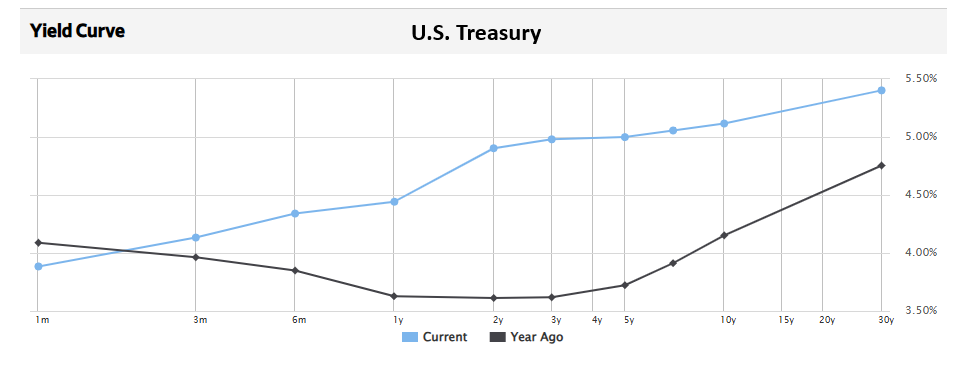
The federal funds rate does not directly determine most long-term interest rates. Rates on longer-term debt are primarily influenced by market conditions, including:
- Supply and demand for bonds
- Inflation expectations
- Expectations for economic growth
- Government borrowing
- Investor confidence
- Expectations about future Federal Reserve policy
The Federal Reserve may also influence longer-term interest rates by buying or selling Treasury securities.
How the Bond Market Influences Long-Term Rates
Businesses and governments frequently borrow money by issuing bonds. The U.S. government raises money by issuing Treasury securities.
For example, suppose the U.S. Treasury needs to raise $1 billion and offers a 10-year Treasury note with a 4.50% interest rate. If investor demand is not sufficient to raise the full amount, the yield may need to increase to attract additional buyers.
This demonstrates an important bond market principle:
When demand for bonds declines, yields may need to rise to attract investors. When demand is strong, investors may be willing to accept lower yields.
How Higher Interest Rates Affect Stocks
Companies can raise capital by borrowing money or issuing stock. Higher interest rates can affect both options.
Investors generally consider the potential return of an investment in relation to the risk involved. When relatively low-risk investments begin offering higher yields, some investors may become less willing to accept the additional risk associated with stocks.
For example, suppose a 10-year Treasury note offers a 5% yield while the expected long-term return on stocks is 6.5%. The difference is only 1.5 percentage points. Some investors may decide that the additional potential return is not enough to justify the greater uncertainty of the stock market.
As investors shift money toward bonds and other interest-bearing investments, demand for stocks may decline. This can place downward pressure on stock prices.
Higher Borrowing Costs Can Reduce Corporate Profits
Higher interest rates increase borrowing costs for both individuals and businesses.
For consumers, higher rates may result in larger payments on:
- Mortgages
- Credit cards
- Auto loans
- Home equity loans
- Other variable-rate debt
Higher debt payments leave consumers with less money to spend, save, or invest. Reduced consumer spending can affect the revenue and profitability of many businesses.
For companies, higher interest rates can increase the cost of financing:
- Daily operations
- Real estate purchases
- Equipment
- Business expansion
- Acquisitions
- Existing variable-rate debt
If higher borrowing costs reduce a company’s expected profits, investors may reconsider how much they are willing to pay for its stock.
Interest-Rate-Sensitive Industries
Companies and industries that depend heavily on borrowing may be affected more than businesses with lower debt levels.
Interest-rate-sensitive sectors may include:
- Real estate
- Utilities
- Financial services
- Energy
- Telecommunications
- Other capital-intensive industries
Dividend-paying stocks may also face greater competition from bonds when bond yields rise. If investors can earn an attractive return from a comparatively lower-risk bond, they may be less willing to accept the risks associated with dividend-paying stocks.
However, interest rates do not affect every company in the same way. A company’s debt level, profitability, cash flow, pricing power, and overall financial strength can influence how it responds to changing economic conditions.
How Higher Interest Rates Affect Bonds
Bonds are generally affected more directly by interest-rate changes than stocks.
Bond prices and market interest rates normally have an inverse relationship:
- When market interest rates rise, existing bond prices generally fall.
- When market interest rates fall, existing bond prices generally rise.
Understanding the Relationship Between Bond Prices and Yields
Suppose an investor purchases a 10-year Treasury note with a face value of $1,000 and an interest rate of 4.75%.
Three months later, newly issued 10-year Treasury notes offer a 5% yield. An investor would have little reason to pay the full $1,000 for the older note when a new note offering a higher rate is available.
To sell the older note, its market price would generally need to decline. The lower purchase price helps increase the buyer’s effective return, bringing it closer to the current market yield.
The bond’s actual market price would depend on several factors, including:
- Its coupon rate
- Current market interest rates
- The time remaining until maturity
- The issuer’s credit quality
- Market liquidity
- Any special features of the bond
If the original investor continues to hold the Treasury note, the investor will keep receiving its scheduled interest payments. Assuming the issuer meets its obligations, the investor will also receive the bond’s face value at maturity.
The decline in market value becomes especially important if the investor needs to sell the bond before it matures.
Holding an Individual Bond Until Maturity
An investor who holds an individual bond until maturity may be less concerned about temporary fluctuations in its market price, provided that:
- The issuer does not default
- The investor does not need to sell the bond early
- The bond is not called or redeemed before maturity
- Inflation does not substantially reduce the purchasing power of the payments
Holding a bond until maturity does not eliminate every risk. Investors should still consider:
- Credit risk: The possibility that the issuer will not make its required payments
- Inflation risk: The possibility that inflation will reduce the purchasing power of the bond’s income
- Interest-rate risk: The possibility that rising rates will reduce the bond’s market value
- Reinvestment risk: The possibility that future interest or principal payments will have to be reinvested at lower rates
- Call risk: The possibility that the issuer will redeem the bond before maturity
- Liquidity risk: The possibility that the bond will be difficult to sell at a reasonable price
U.S. Treasury securities are generally considered to have low credit risk because they are backed by the full faith and credit of the U.S. government. Corporate and municipal bonds may carry varying levels of default risk.
How Rising Rates Affect Bond Funds and ETFs
Bond mutual funds and bond exchange-traded funds, or ETFs, own portfolios of individual bonds. As interest rates change, the market values of those bonds also change.
A fund’s share price reflects the current market value of its portfolio. This is known as its net asset value, or NAV. When interest rates rise and bond prices fall, the value of a bond fund may decline.
Unlike an individual bond, a traditional bond fund generally does not have a single maturity date when an investor receives a predetermined face value. The fund continually buys and sells securities as bonds mature, investors add or withdraw money, and portfolio managers adjust their holdings.
For this reason, some investors prefer to own individual bonds with staggered maturity dates. This strategy is commonly known as a bond ladder.
However, individual bonds are still affected by interest-rate changes. If an individual bond portfolio were priced or sold before maturity, its market value would generally reflect the same rate-related changes affecting the bonds held by a mutual fund or ETF.
The Potential Benefits of Higher Interest Rates
Although rising rates can reduce the market value of existing bonds, they may also create opportunities for investors seeking income.
As bonds mature and interest payments are received, the money can potentially be reinvested in newly issued bonds offering higher yields. Over time, this may increase the income generated by a fixed-income portfolio.
The potential benefits may be greater for investors who:
- Reinvest their interest payments
- Own bonds with shorter maturities
- Maintain a bond ladder
- Regularly purchase new bonds
- Do not need to sell existing bonds during a market decline
The improvement in income is usually gradual. A bond portfolio may generate more income over time even while its current market value is temporarily lower.
Keeping Interest-Rate Changes in Perspective
The global economy is complex, and many factors influence investment prices at the same time. Rising interest rates do not automatically mean that stock prices will fall.
Strong economic growth, improving corporate earnings, and positive investor sentiment may offset some of the pressure created by higher borrowing costs.
Bonds typically respond more directly to interest-rate changes. However, the size and speed of the adjustment depend on:
- How much interest rates change
- How quickly rates change
- Whether investors expected the change
- The bond’s maturity and coupon rate
- The issuer’s credit quality
Bonds with longer maturities generally experience greater price changes than comparable bonds with shorter maturities. A bond’s sensitivity to interest-rate movements is commonly measured by its duration.
The Value of a Consistent Investment Strategy
Investors cannot reliably predict every change in interest rates, financial markets, or the economy. Making major portfolio decisions based on short-term forecasts may create additional risk.
A disciplined investment strategy should consider:
- Your financial goals
- Your investment time horizon
- Your income needs
- Your tolerance for market risk
- Your need for liquidity
- Your tax situation
Diversification, appropriate bond maturities, and gradual portfolio adjustments may help reduce the effect of changing interest rates. The right strategy will depend on your personal circumstances and long-term financial objectives.
Make Investment Decisions With Your Goals in Mind
Interest-rate changes can create both risks and opportunities. Understanding how rates affect stocks, bonds, borrowing costs, and investment income can help you evaluate your portfolio more effectively.
Before adjusting your investments, consider how the change supports your overall financial plan rather than reacting only to short-term market conditions.
Need help reviewing your investment or retirement income strategy?
Schedule a consultation and discuss how changing interest rates may affect your financial goals.
Important Disclosure
Neither Stratos nor Synergy Wealth Management provides legal or tax advice. Please consult legal or tax professionals for specific information regarding your individual situation.
This article is provided for general educational and informational purposes only. It is not intended as individualized investment, tax, legal, or financial advice. Investment decisions should be based on your financial circumstances, objectives, time horizon, and tolerance for risk. Investing involves risk, including the possible loss of principal. Consult an appropriately qualified professional before making financial or investment decisions.