
The New Macro Playbook: Growth, Capex, and the AI Interest Rate Conundrum
The economic narrative is defying traditional textbooks. Historically, widespread corporate restructuring and shifting labor dynamics signaled a cooling economy. Today, however, the U.S. economy continues to exhibit resilient growth despite localized workforce disruptions. The primary catalyst for this shift is Artificial Intelligence, which has officially transitioned from a forward-looking investment thesis into a concrete operating reality.
As AI becomes deeply embedded in the corporate landscape, it is fundamentally reconfiguring macroeconomic indicators. Below is a breakdown of how AI is sustaining economic growth, driving unprecedented capital expenditures, and interacting with a complex interest rate environment.
The Growth Paradox: Job Restructuring vs. GDP Resilience
One of the most striking features of the current economic environment is the apparent contradiction between labor market shifts and broader economic expansion. While high-profile automation has led to targeted job cuts in several sectors, the U.S. GDP continues to expand at a healthy, steady pace.
- Shift From Augmentation to Automation: In earlier phases, AI was primarily viewed as a tool to assist human workers, but enterprise usage has rapidly shifted toward full automation.
- Tangible Corporate Efficiency: Major software and enterprise firms are reporting 15% to 30% efficiency gains through AI implementation, with some companies flatting headcounts while simultaneously increasing overall output.
- Sustaining the Macro Floor: Rather than dragging down the economy, this labor reconfiguration is driving margin expansion and corporate earnings growth. This structural productivity boost provides a firm floor that prolongs economic expansion, keeping real GDP resilient even as traditional labor metrics soften.
The Massive AI Capex Boom: “Micro is Macro”
The scale of capital expenditure (capex) dedicated to the AI buildout is so massive that individual corporate spending decisions are now having a direct macroeconomic impact.
- Astronomical Spending Targets: Hyperscaler capex is projected to skyrocket to approximately $610 billion, up from $360 billion just a year prior.
- Early-Stage Scaling: The economy is currently in an intensive, early-stage investment cycle where scaling raw capacity—building data centers, acquiring information-processing equipment, and securing power infrastructure—takes precedence over immediate cost optimization.
- An Economic Anchor: This aggressive physical and digital infrastructure spend acts as a powerful economic stimulant. The massive capital flow into sectors like semiconductors, software, and utilities is helping offset structural slowdowns in more consumer-sensitive areas of the economy.
The Interest Rate Conundrum: Financing the Future at a Premium
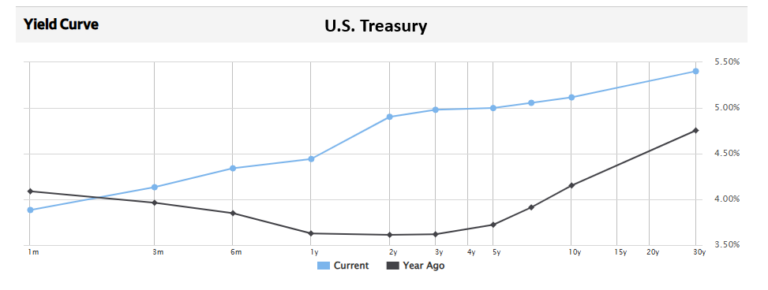
The explosive growth of AI is not happening in a vacuum; it is colliding with sticky inflation and a restrictive central bank policy. This creates a unique set of challenges regarding how this technological revolution is funded.
- The Financing Hump: The AI buildout requires heavily front-loaded capital investments, while the actual revenue streams generated by these technologies are back-loaded.
- Rising Leverage in the System: Because the capital requirements far exceed what even the largest tech giants can fund internally, companies are actively tapping public and private credit markets. This is driving an inevitable increase in private-sector leverage.
- The Cost of Capital: With the Federal Reserve maintaining a cautious stance and keeping interest rates elevated, a structurally higher cost of capital increases the overall hurdle rate for AI investments.
- A Macro Tug-of-War: If inflation and rates remain high, it threatens to squeeze corporate margins and escalate the cost of AI debt. However, if the productivity gains from AI successfully lower operational costs across the broader economy, it could ultimately exert downward pressure on structural inflation, giving central banks the leeway to lower interest rates down the line.
Conclusion: Separating Signal from Noise
The U.S. economy is actively rewriting the traditional macro playbook. The massive capex boom from AI is successfully anchoring economic resilience and boosting corporate earnings, even as the labor market undergoes a rapid, software-driven evolution. While high interest rates present a formidable challenge to financing this massive buildout, the sheer velocity of AI adoption is proving to be a primary engine of modern economic growth. For a data-minded audience, the takeaway is clear: look past localized labor turbulence and watch where the capital expenditure is flowing.