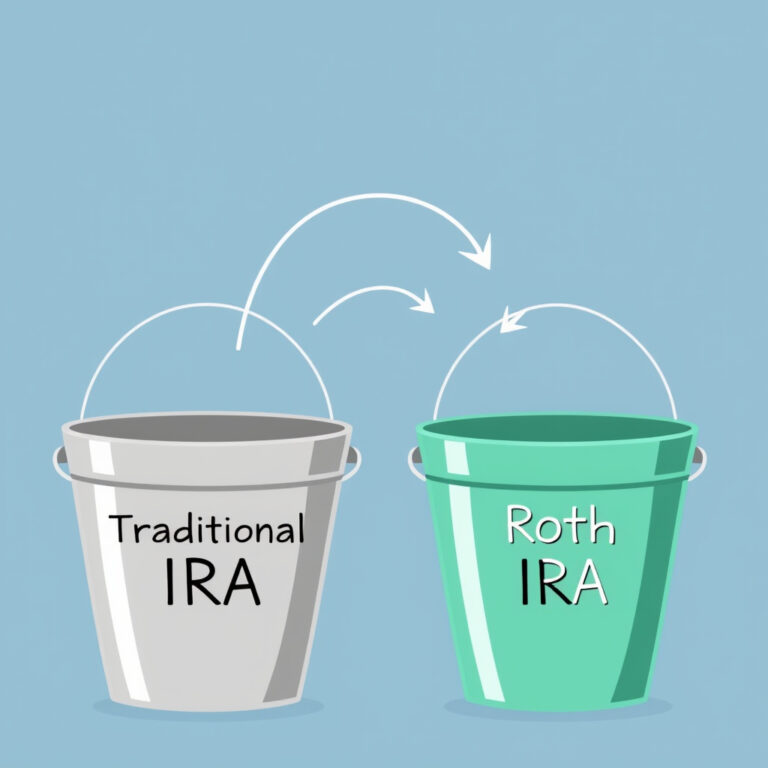

Reaching retirement is a major milestone, but it also marks the beginning of a complex financial chapter: the decumulation phase. For many retirees, one of the most critical decisions they face is what to do with the assets they have built up in their employer-sponsored 401(k) plan.
Traditionally, the automatic move has been to roll those funds over into an Individual Retirement Account (IRA). However, according to an extensive study published in the Financial Services Review (2023) by Olivia S. Mitchell, Catherine Reilly, and John A. Turner, the choice is rarely clear-cut. For a significant portion of retirees—particularly those with low or moderate financial literacy—remaining in a workplace plan may actually prove to be the more financially rewarding path.
To help you evaluate your options, let’s explore the potential benefits and drawbacks of rolling over your employer plan into an IRA.
The Benefits of Rolling Over to an IRA
For many individuals, an IRA provides a level of autonomy and customization that a corporate retirement plan simply cannot match. Here are some of the primary reasons retirees often choose to transition their funds:
- An Expansive Investment Menu: While a typical large 401(k) plan offers a curated selection of about 28 investment options, an IRA opens the door to thousands of mutual funds, exchange-traded funds (ETFs), individual stocks, bonds, and even alternative assets like gold or cryptocurrency.
- Account Consolidation and Simplification: Over a long career, it is common to accumulate multiple 401(k) accounts across different past employers. Rolling these disparate accounts into a single, centralized IRA can streamline your portfolio management and make tracking your required minimum distributions (RMDs) substantially easier.
- Greater Withdrawal Flexibility: Some employer plans restrict how frequently you can access your savings, occasionally limiting the number of partial distributions or charging unique administrative fees for withdrawals. IRAs generally offer much more flexible access to your money.
- Sophisticated Tax Strategies: Transitioning assets into an IRA provides an opportunity for a Roth conversion. While this move triggers immediate tax liabilities, it can allow your assets to potentially grow tax-free. Unlike Traditional IRAs, Roth IRAs are not subject to the RMD rule, which may serve as a powerful estate planning tool for your heirs.
- Easier Access to Annuities: For those looking to mitigate longevity risk by securing a guaranteed income stream for life, traditional commercial annuities can currently be purchased more readily through an IRA marketplace than within most 401(k) ecosystems.
- Greater Access to Advice: Advice is either not offered in 401(K) plans or very limited. If you are looking to build a relationship with an advisor and have access to more comprehensive financial planning, you will often want to rollover your plan assets to an IRA.
The Drawbacks of Rolling Over to an IRA
Despite the appeal of broader choices and flexibility, walking away from an employer-sponsored plan can introduce hidden costs and eliminate systemic safeguards.
Key Finding from the Research:
Large employer-sponsored defined contribution plans frequently leverage institutional bargaining power to secure institutional share classes and investment options that are generally unavailable to individual retail investors.
Remaining in your workplace plan may offer several distinct advantages:
- The Power of Institutional Pricing: On average, 401(k) investors tend to pay lower investment fees than retail IRA investors. For context, data highlights that the asset-weighted expense ratio for 401(k) equity mutual funds sat at 39 basis points (0.39%) in 2020, compared to 57 basis points (0.57%) for similar funds in IRA accounts. Large plans also utilize Collective Investment Trusts (CITs), which can drive costs down even further.
- Built-In Fiduciary Oversight: Under U.S. law, 401(k) plan sponsors are bound by a strict ERISA fiduciary duty to act solely in the participants’ best interests. This means an employer must continually vet and monitor the plan’s investment menu to filter out poorly performing or excessively expensive funds. IRAs do not feature an institutional fiduciary oversight board to pre-screen choices for you.
- Streamlined Decision-Making: For savers who lack the time or expertise to manage a vast portfolio, an IRA’s thousands of choices can lead to decision paralysis or suboptimal risk exposure. Conversely, 401(k) plans provide professional default options—like target-date funds (TDFs)—that automatically shift to a conservative asset allocation during your retirement years without requiring ongoing active management or external advice fees.
- Robust Protection from Creditors: Under federal law, assets maintained within a 401(k) plan enjoy robust protection from bankruptcy and creditor claims. IRA protections, by contrast, can vary significantly depending on individual state laws and bankruptcy caps.
- The “Age 55” Early Access Rule: If you separate from service with your employer during or after the year you turn 55, you can potentially access your 401(k) funds penalty-free. If you roll those assets into an IRA, you generally must wait until age 59½ to avoid a 10% early withdrawal penalty.
Comparing the Costs: Plan Size Matters
The financial viability of a rollover heavily depends on the size of your current employer’s plan. Small workplace plans (with under $1 million in assets) often carry higher administrative burdens and fewer index fund options, which can elevate total costs to an average of 144 basis points. In contrast, mega plans feature much lower overhead.
The following table outlines the calculated financial gain or loss (in basis points) when moving assets from various 401(k) plan sizes into an IRA, excluding explicit advice costs:
| Type of Account & Plan Size | Average Retail IRA Fees (57 bps) | Benchmark Low-Cost IRA TDF Fee (10 bps) |
| Small 401(k) (<$10M assets / Avg. Cost: 104 bps) | +47 bps (Potential Savings) | +94 bps (Potential Savings) |
| Medium 401(k) (<$250M assets / Avg. Cost: 48 bps) | -9 bps (Potential Loss) | +38 bps (Potential Savings) |
| Large 401(k) (>$1B assets / Avg. Cost: 22 bps) | -35 bps (Potential Loss) | +12 bps (Potential Savings) |
| Mega 401(k) (CITs / Avg. Cost: 8 bps) | -49 bps (Potential Loss) | -2 bps (Potential Loss) |
Note: A positive number indicates a potential fee reduction by moving to an IRA; a negative number indicates that remaining in the employer plan is likely more cost-effective.
Final Considerations
Ultimately, there is no one-size-fits-all solution for the rollover decision. For individuals participating in high-fee, small-employer plans—or for sophisticated investors capable of constructing optimized, low-cost portfolios independently—an IRA rollover may be an option worth considering.
However, for a substantial portion of retirees, staying put in a larger corporate plan may offer advantages worth considering when evaluating your options. Keeping your assets under the umbrella of institutional pricing and fiduciary oversight can help support an efficient, coordinated approach to managing your account.
Source: Financial Services Review 31 (2023) 1-21
Disclaimer
Investment advice offered through Stratos Wealth Advisors, LLC, a registered investment advisor. Stratos Wealth Advisors and Synergy Wealth Management are separate entities. Neither Stratos nor Synergy Wealth Management provides legal or tax advice. Please consult legal or tax professionals for specific information regarding your individual situation.